
How Long Does it Take to Learn Hiragana and Katakana?
As a beginner in Japanese, your first step is diving into the alphabets of Hiragana and Katakana. These are the building blocks of the Japanese language and are essential for your journey ahead. Let’s explore how long it might take to learn them.
Understanding Hiragana and Katakana
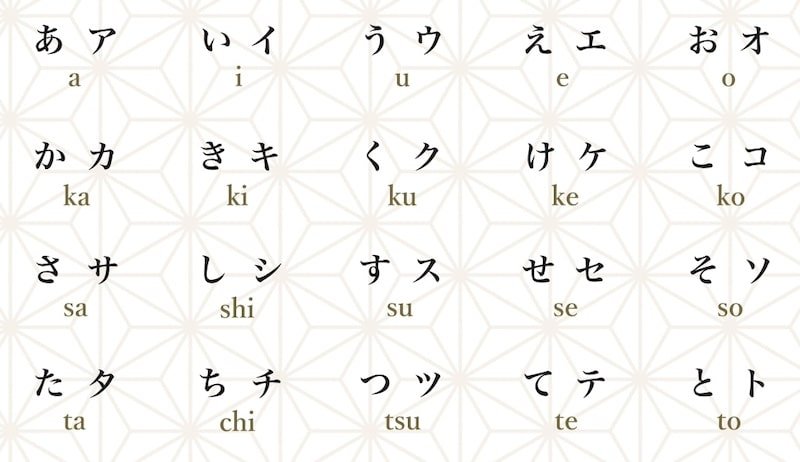
First things first, what are Hiragana and Katakana? They are two of the three writing systems used in Japanese (the third one being Kanji).
Hiragana is often used for native Japanese words and grammatical elements, while Katakana is typically used for foreign words, names, and for emphasis.
Both have 46 basic characters, and each character represents a unique sound.
How Long Does It Take to Learn Hiragana and Katakana?
The good news is, with consistent practice, learning Hiragana and Katakana can be a swift process. Most learners can grasp the basics of these alphabets in:
- Hiragana: 1 to 2 weeks
- Katakana: 1 week
Why the difference? Hiragana is often taught first and might take a bit longer due to its use in forming Japanese words and sentences.
Once you're familiar with Hiragana, picking up Katakana becomes easier as it uses the same sounds, just with different symbols.
How many hours does that make? With around 30 minutes per day, it should take you around 7 to 10 hours.
Tips for Quick Learning
- Flashcards: Use flashcards to memorize each character and its corresponding sound. Digital flashcards or apps can be particularly handy.
- Daily Practice: Dedicate at least 15-30 minutes daily to writing and reading the characters. Consistency is key!
- Apply in Context: Try to read simple words or sentences in Hiragana and Katakana. This contextual learning boosts memorization.
And this is why at Hirakan, we've created a product that will help you do all of the above. We build it so that you can integrate learning hiragana and katakana in your daily routine, without even the need to open an app.
It's our Hiragana and Katakana mug:

Final Words: On Your Way to Kanji
Learning Hiragana and Katakana is like unlocking the first door to understanding Japanese. With dedication and regular practice, you can master these alphabets in a few weeks. This foundation will pave the way for your journey into the Japanese language and culture. がんばって (do your best)!
- You might also like: How Long Does it Take to Learn Kanji?
Related Posts
-
![な形容詞 (Na-adjectives) – Basic Forms with です in Japanese [JLPT N5]](//hirakan.com/cdn/shop/articles/na-keiyoushi-basic-desu-forms.jpg?v=1769251316&width=170)
な形容詞 (Na-adjectives) – Basic Forms with です in Japanese [JLPT N5]
Quick Summary Meaning: な形容詞 (na-adjectives) are adjectives that describe what something or someone is like, sim...
-
![で – Marking Where and How an Action Happens in Japanese [JLPT N5]](//hirakan.com/cdn/shop/articles/de-where-how-action-happens.jpg?v=1763264973&width=170)
で – Marking Where and How an Action Happens in Japanese [JLPT N5]
Quick Summary Meaning: で marks the location where an action happens or the means/tool/method used to do something...
-
![が – Marking the Subject ('Who/What') in Japanese [JLPT N5]](//hirakan.com/cdn/shop/articles/ga-subject-marker_60f30f70-6ca5-47ee-9a00-3646195d7d3c.jpg?v=1761386355&width=170)
が – Marking the Subject ('Who/What') in Japanese [JLPT N5]
Quick Summary Meaning: The particle が marks the subject of a sentence and highlights new or focused information (an...
![な形容詞 (Na-adjectives) – Basic Forms with です in Japanese [JLPT N5]](http://hirakan.com/cdn/shop/articles/na-keiyoushi-basic-desu-forms.jpg?v=1769251316&width=170)
![で – Marking Where and How an Action Happens in Japanese [JLPT N5]](http://hirakan.com/cdn/shop/articles/de-where-how-action-happens.jpg?v=1763264973&width=170)
![が – Marking the Subject ('Who/What') in Japanese [JLPT N5]](http://hirakan.com/cdn/shop/articles/ga-subject-marker_60f30f70-6ca5-47ee-9a00-3646195d7d3c.jpg?v=1761386355&width=170)